Teething: Practical, Evidence-Based Guidance for Parents
11/26/2025
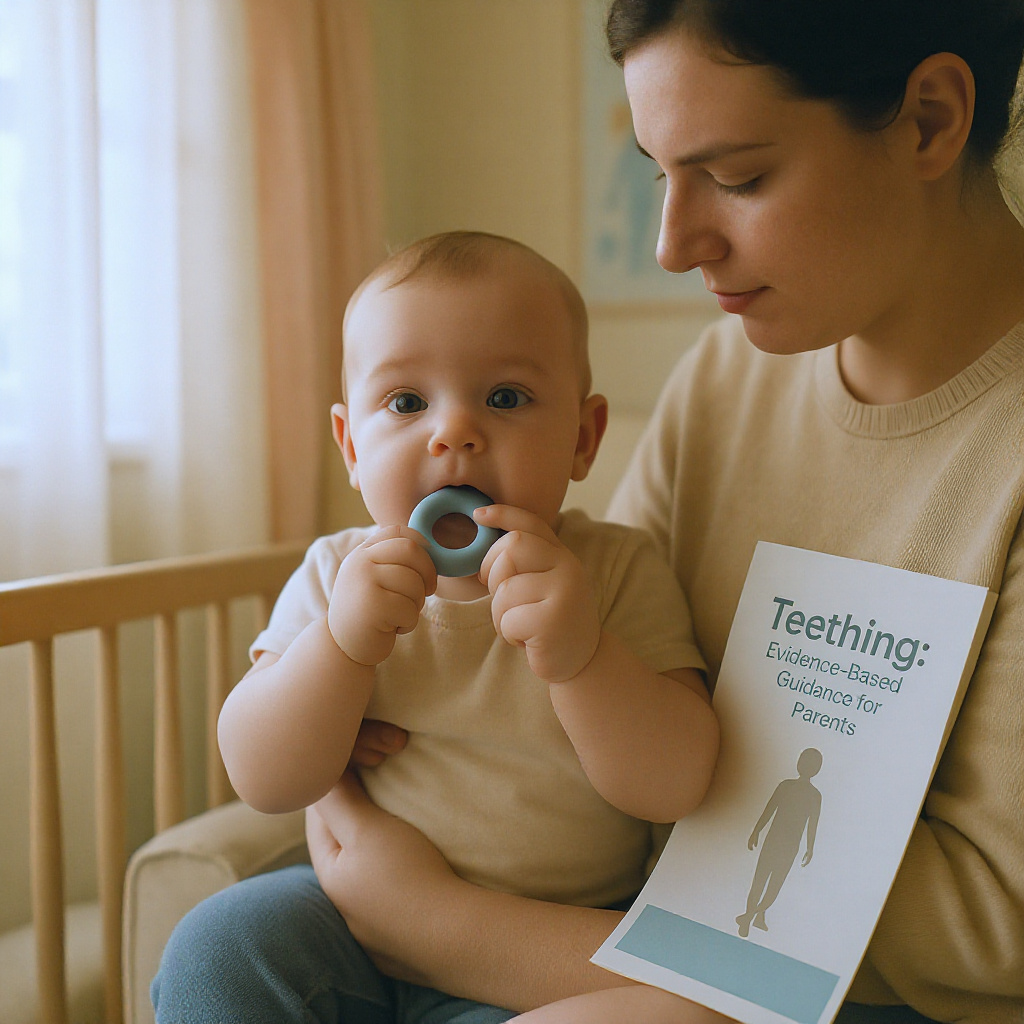
Main point: Teething is a common, usually mild process. Most babies find relief from simple, low-risk measures (chilled teethers, gentle gum massage, extra comfort). Seek medical care when symptoms are severe, prolonged, or suggest illness rather than teething.
What to try first (most effective, low risk):
- Offer a chilled (not frozen) silicone teether or a clean, cool washcloth to chew on.
- Gently rub the gums with a clean finger to ease pressure.
- Provide extra cuddles, quiet distraction, and short soothing routines at bedtime.
- Consult your pediatrician before giving any medication; follow weight-based dosing guidance from your clinician.
Key safety points:
- Avoid topical benzocaine and teething necklaces; both are unsafe for infants.
- Supervise any chewable items and avoid small or hard objects that pose choking hazards.
- Do not use frozen hard objects directly on gums.
When to call the pediatrician or seek urgent care:
- High fever (above 38°C / 100.4°F) or persistent fever.
- Signs of dehydration: very few wet diapers, dry mouth or lips, sunken soft spot.
- Severe vomiting, prolonged diarrhea, extreme sleepiness, breathing problems, or marked feeding refusal.
Background and timeline: Teething often begins around 4–7 months but can start earlier or later. Teeth generally appear in a typical order (lower front first), though individual patterns vary.
Oral care and feeding tips:
- Before teeth: wipe gums with a clean, damp cloth after feeds.
- From first tooth: use a small, soft-bristled toothbrush and a smear (rice-sized) of fluoride toothpaste twice daily.
- Avoid letting baby fall asleep with a bottle of milk or juice; introduce a cup around six months and limit sugary drinks.
Nighttime and caregiver support: Keep bedtime routines calm and predictable. Offer a chilled teether before sleep, use soft white noise, and follow safe sleep guidelines. Caregivers should rest when possible, share duties, and ask for help if overwhelmed.
Quick answers:
- Timing: commonly 4–7 months but variable.
- Pain relief: try nonpharmacologic measures first; consult your pediatrician for medicines and dosing.
- Safety: avoid benzocaine and teething necklaces; supervise chewables.
Sources and next steps: For clinical specifics and medication safety check guidance from the American Academy of Pediatrics (AAP), the American Dental Association (ADA), the NHS, and FDA advisories. When in doubt, call your pediatrician for tailored advice and weight-based medication recommendations.
Articles for you

Embracing the Natural Birth Experience: A Path to Empowerment and Connection
Bringing a new life into the world is nothing short of extraordinary, and choosing a natural birth can be a deeply personal and empowering experience ...

Exploring the Right Breastfeeding Positions for You and Your Baby
Breastfeeding positions play a pivotal role in not just the nutritional success of feeding but also the nurturing bond you share with your little one....

Understanding Baby Sleep Patterns: A Guide for New Parents
The birth of a baby is an exciting and transformative time, but it can also be filled with uncertainty, particularly when it comes to sleep. Understan...