Maternal Vaccines Explained: What, Why, How, What If
21/5/2026
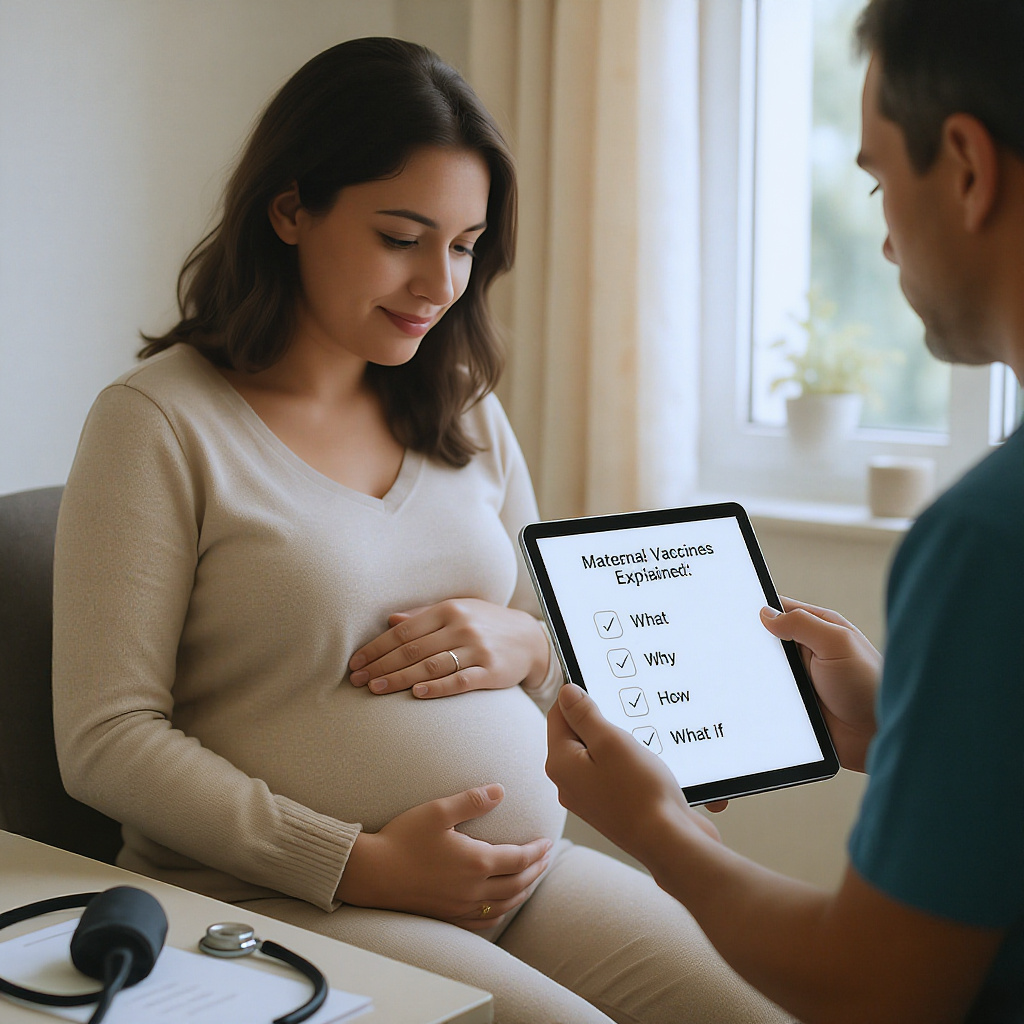
If you’re pregnant (or recently postpartum) and you feel uneasy about vaccines, you’re not alone. It’s completely human to wonder: what exactly is being recommended, why it matters, how it fits into your pregnancy timeline, and what happens if you skip—or if you want a deeper plan instead of a one-size-fits-all checklist.
This section uses a simple framework—What, Why, How, What If—so you can make sense of maternal vaccination without fear or guesswork.
WHAT are we talking about?
We’re talking about vaccines that are recommended during pregnancy and/or the postpartum period to help reduce risk for you and, for certain infections, to also support your baby’s protection in the earliest weeks.
Depending on your country, your health history, and local disease patterns, the most commonly discussed pregnancy vaccines include:
- Tdap (tetanus, diphtheria, acellular pertussis) to help protect newborns from pertussis.
- Influenza (flu) to reduce risk of severe flu during pregnancy and to support infant protection after birth.
- COVID-19 vaccination to reduce risk of severe disease for pregnant people and support protection strategies recommended by public health authorities.
- RSV where recommended for your setting, typically timed to protect infants during the earliest months of life.
Some vaccines may be conditional—meaning they depend on risk factors such as medical conditions, exposure risk, travel, or whether you’re already immune.
WHY is it important?
Maternal vaccination is designed around two key ideas:
- Risk reduction for you during pregnancy. Pregnancy changes how your body handles infections. For certain illnesses, that can raise the chance of more severe outcomes.
- Early-life protection for baby when applicable. For some vaccines, your body builds antibodies that can cross the placenta, providing a temporary, guided layer of defense during the newborn period—especially important when babies are too young to be fully vaccinated themselves.
It helps to think of this as layered protection, not a guarantee of zero risk. Even with vaccination, infections can still happen—but vaccination is expected to lower the likelihood of severe disease and reduce the odds of complications for both mother and baby where appropriate.
Recommendations are based on evidence that balances benefits and risks, and they are updated as safety monitoring and research evolve. Trusted sources include the CDC, ACOG, and the WHO.
HOW do you do it? (Timing, safety, and expectations)
1) Timing follows protection windows
Vaccines aren’t scheduled at random points. Timing is chosen to fit when:
- you’re most likely to benefit during the season or outbreak period, and
- (for certain vaccines) your immune response has enough time to generate antibodies that may be transferred to your baby.
For example:
- Tdap is typically given during each pregnancy, most often in the late second trimester or early third trimester.
- Flu vaccination aligns with flu season where you live.
- COVID-19 eligibility and timing can vary by product and current guidance, so it’s best to follow the latest recommendations from public health authorities and your prenatal team.
2) Safety is evaluated and monitored
Vaccines recommended in pregnancy are chosen because they have been evaluated for safety and benefit, and they continue to be tracked in real-world use. Many pregnancy vaccines are built from forms/components that cannot cause the disease they protect against.
When you’re choosing a vaccine plan, the goal isn’t “zero side effects.” It’s an evidence-based balance where the expected benefit outweighs the expected risk for most people in the recommended situations.
3) What side effects are common?
Most reactions are short-lived and reflect your immune system responding. Common, generally mild side effects may include:
- Soreness, redness, or swelling where the shot was given
- Mild fever or feeling run-down
- Headache, muscle aches, or fatigue
- Nausea or feeling “off” for a day
4) When should you call a clinician?
Seek urgent medical advice or emergency care if you experience signs of a severe allergic reaction (such as trouble breathing, facial/throat swelling, widespread hives, dizziness/fainting). Also contact your care team promptly for concerning or worsening symptoms, such as a high/persistent fever or severe/worsening injection-site pain with significant swelling.
If you’re unsure, it’s always appropriate to ask—pregnancy is a time when extra reassurance is valid.
WHAT if you don’t (or want to go further)?
1) If you don’t get recommended vaccines
You may miss the intended protection during the specific windows when you (and sometimes your baby) are most vulnerable. That can mean higher risk of severe illness for you during pregnancy for certain infections, and potentially less early-life antibody support for baby for vaccines where maternal antibodies are part of the protection strategy.
It’s okay if you’re still deciding—just don’t leave the question unanswered. Bring your concerns to your prenatal clinician so you can weigh your personal risks and the recommended timing.
2) If you want a deeper plan (instead of a generic one)
You can go beyond “Am I supposed to?” and ask for a clear, personalized roadmap:
- “Which vaccines are recommended for me right now, and why?” (tie it to your pregnancy week and your local risk)
- “Which side effects are typical for each vaccine, and what should be concerning?”
- “How does my plan change postpartum?” (and how it overlaps with your baby’s appointment schedule)
- “Which guideline are you using—CDC/ACOG/WHO—and how do you apply it to my situation?”
3) If you’re behind or your records are incomplete
Many people don’t start prenatal care immediately, switch providers, or lack documentation. In those cases, clinicians can still build a catch-up or optimized schedule based on current guidance and what’s still ahead in your pregnancy and postpartum period.
“Catch-up” doesn’t mean you did anything wrong—it means your care is being tailored to close gaps safely and efficiently.
4) If you want help choosing comfort + logistics
You can plan for recovery in advance: hydration, rest, and simple comfort measures for injection-site soreness often make the day or two after vaccination easier. If you’re breastfeeding or postpartum, your care team can also help you choose the safest approach for symptom relief.
Best for: Educational blogs, thought leadership, explainer content
This framework is designed to reduce anxiety by replacing “mystery” with structure. Instead of focusing on perfection, it helps you understand the purpose of maternal vaccination, how timing is chosen, what to expect, and how to make decisions that fit your situation.
Quick takeaway
- What: pregnancy/postpartum vaccines to reduce risk and (for certain illnesses) support early infant protection.
- Why: evidence-based benefits for you and sometimes your baby during key vulnerability windows.
- How: timing, safety monitoring, and clear expectations for common side effects.
- What if: discuss concerns, consider personalized catch-up/next-steps, and plan postpartum logistics.
Articles for you

Nurturing Health and Connection: The Essential Role of Hydration During Pregnancy
Hydration is a cornerstone of health, especially during the transformative months of pregnancy. As you journey through this remarkable period, your bo...

Navigating the Postpartum Seas: Empowering Strategies for New Mothers
Beyond the Bump: Navigating Postpartum Bliss with ConfidenceAs you stand on the cusp of motherhood, a wild mix of excitement and apprehension swirls a...

7 Ways to Empower Your Breastfeeding Journey in Public
As a new mom navigating the world of breastfeeding, it's empowering to know that your right to breastfeed in public is protected by law. In the United...