Cradle cap (infant seborrheic dermatitis): a concise guide
2/14/2026
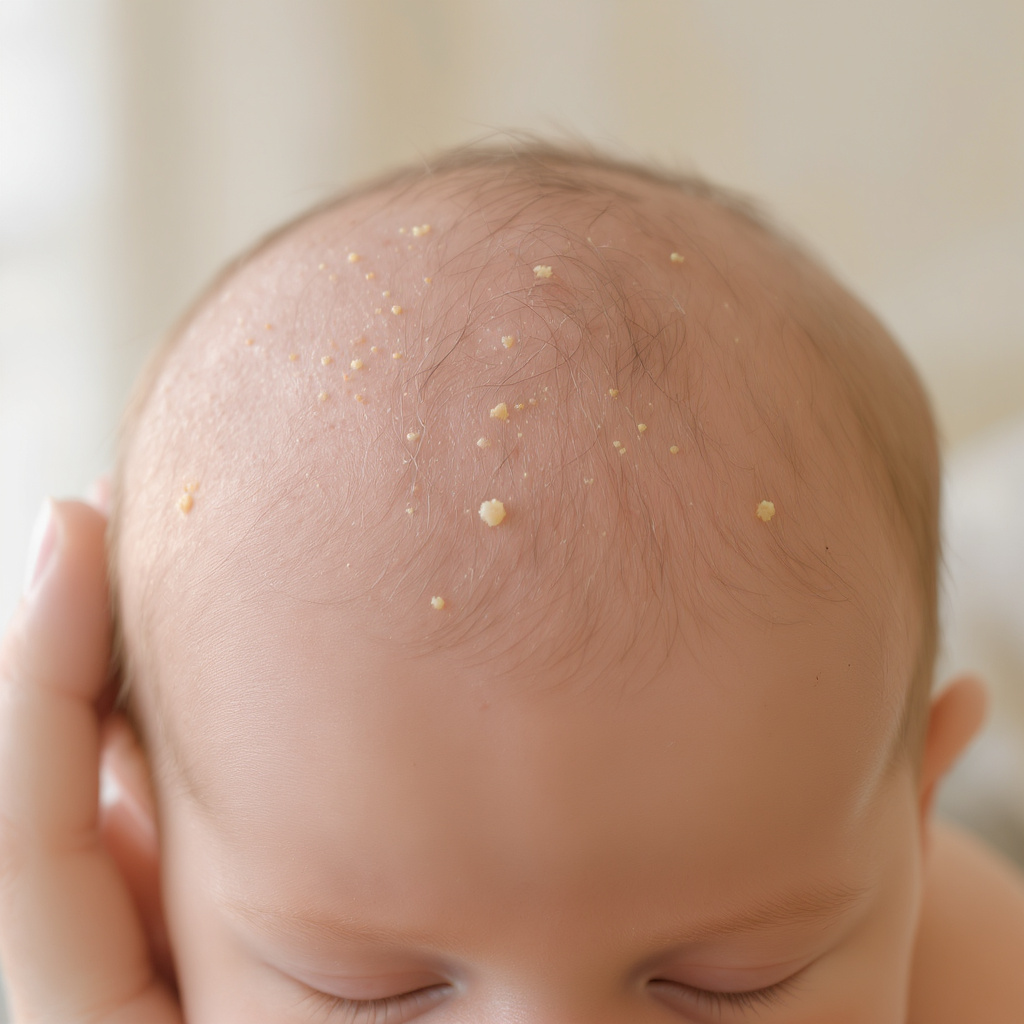
Main point: Cradle cap (infant seborrheic dermatitis) is common and usually harmless—yellowish, flaky or greasy patches on a baby’s scalp that most often improve by 6–12 months. Gentle home care typically works; contact your pediatrician if the skin becomes raw, infected, spreads rapidly, or your baby seems unwell.
Key signs and immediate steps:
- Typical appearance: Yellowish, flaky or greasy scales on the scalp; usually not itchy or painful.
- Other possible locations: eyebrows, behind the ears, eyelid margins (avoid rubbing), or small diaper-crease flakes.
- First-aid at home: Soften scales with warm water or a few drops of light oil for a few minutes, then gently loosen flakes with a soft baby brush or damp washcloth. Follow with a mild, fragrance-free baby shampoo and rinse carefully away from the eyes.
- How often: Several times a week is enough for most babies; avoid daily washing if skin becomes dry or tight.
When to call your pediatrician (red flags):
- Rapid spread, increasing redness, warmth, or raw-looking skin.
- Yellow crusting, oozing, pus, or signs of infection.
- Fever or the baby seems uncomfortable or unusually irritable.
- Heavy involvement of the diaper area or persistent flakes after several weeks of gentle care.
If home care isn’t enough — treatment options
- Often no prescription is needed; when required, clinicians may recommend a short course of medicated shampoo (antifungal) or a low-strength topical steroid for marked inflammation, or topical antifungal creams for localized patches.
- Safety note: Always check with your pediatrician before using medicated shampoos or creams on an infant. Your clinician will pick the safest product, dose, and duration and show how to apply it.
What to expect at an appointment
- The clinician will examine the scalp and nearby skin, ask about duration and treatments tried, and rule out infection or other causes.
- They may demonstrate application of a medicated product, write a prescription, or refer to pediatric dermatology if needed.
How cradle cap differs from other conditions
- Eczema: Often very dry, bright red, and itchy; commonly affects cheeks and skin folds.
- Psoriasis: Thicker, well-defined pink plaques with silvery scale; may run in families.
- Fungal infections: More inflamed or moist with satellite lesions; diaper-area yeast is an example.
Practical prevention and comfort tips
- Use soft, breathable clothing (cotton) and mild, fragrance-free detergents; skip fabric softeners and dryer sheets for sensitive skin.
- Avoid harsh scrubbing, heavy oils if they worsen greasiness, and direct contact with eyes when rinsing.
- Keep a small photo timeline and note products tried—this helps follow-up visits go faster and clearer.
Support for parents — cradle cap is common and usually cosmetic. Share tasks, accept help, and contact your pediatrician for reassurance if you’re unsure. Seek immediate help if you notice the red flags above or if you or your baby feel unwell.
Articles for you

Understanding and Managing Toddler Jealousy
Understanding and Managing Toddler Jealousy Welcoming a new baby into your family often brings immense joy, but it can also stir complex feelings in y...

Nurturing Your Skin During Pregnancy: A Guide to Healthy, Glowing Skin
Pregnancy is a time of profound transformation, both emotionally and physically. Among the many changes expectant mothers experience, shifts in skin h...

The Essential Guide to Pregnancy Support Belts: Comfort and Care for Expectant Mothers
Pregnancy support belts, also known as maternity belts or prenatal cradles, provide gentle compression and support to a pregnant belly. These speciali...